97
98
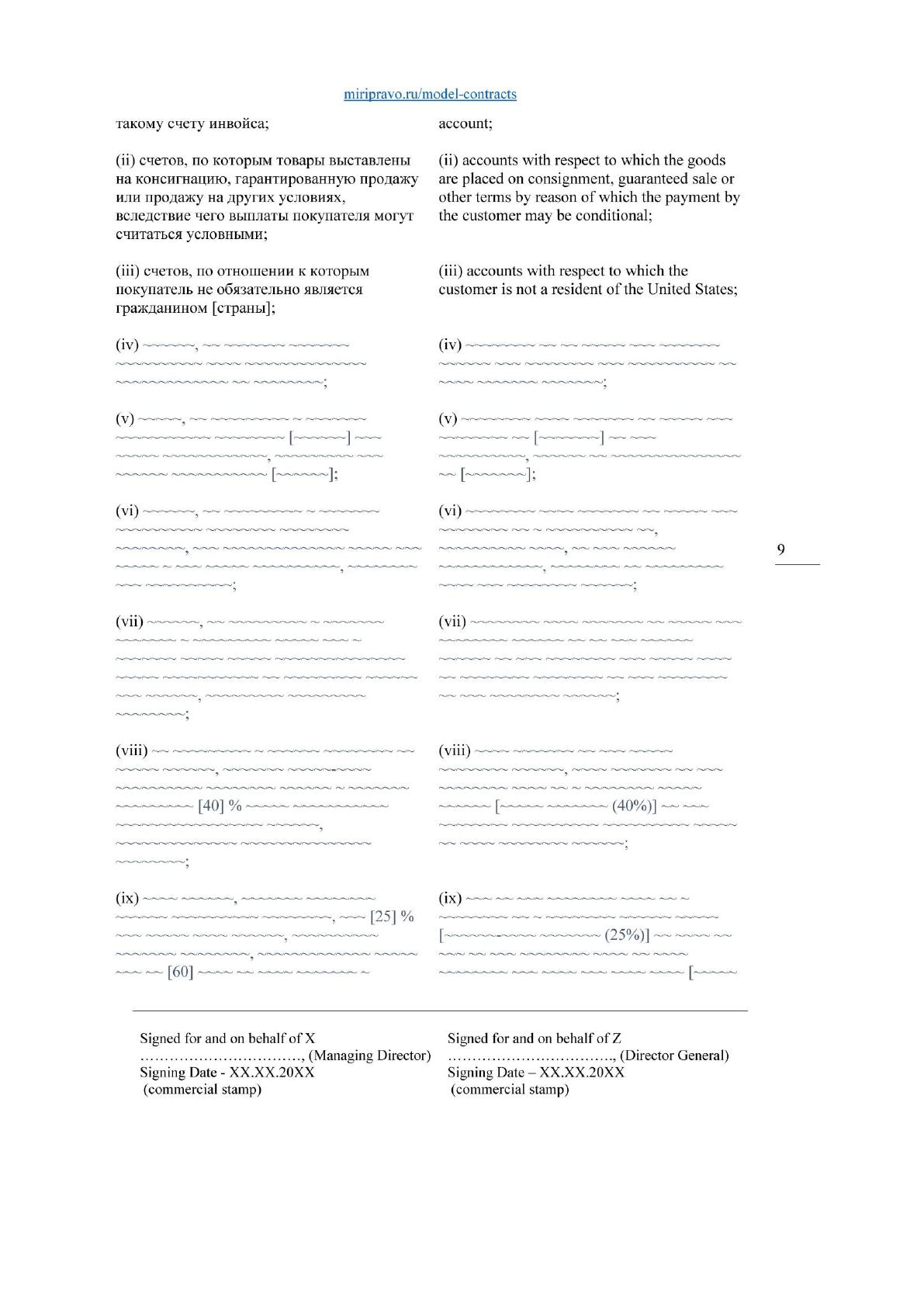
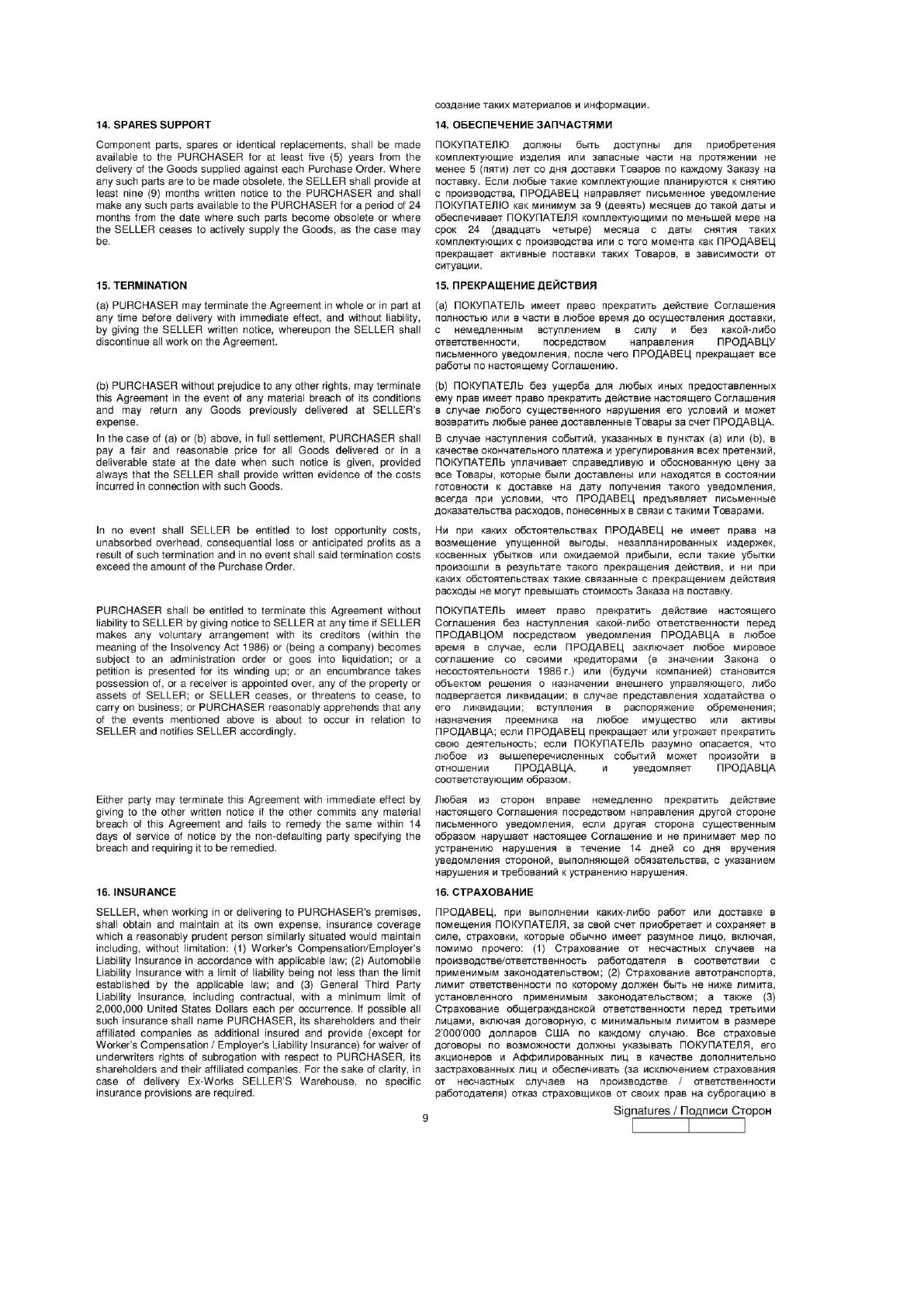
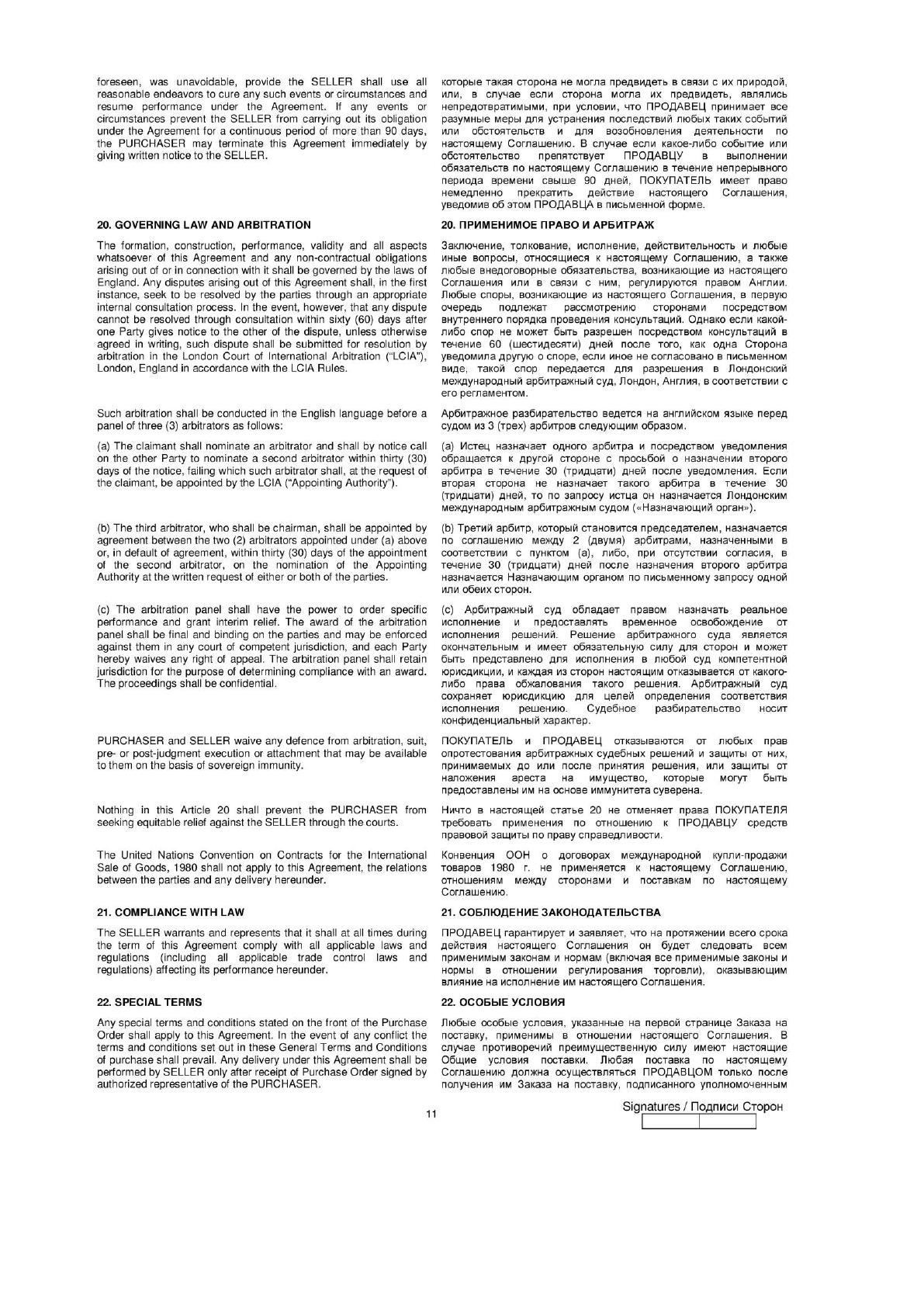
Приложение 8. Соглашение об общих условиях поставки, стр. 9, 11.

99
100
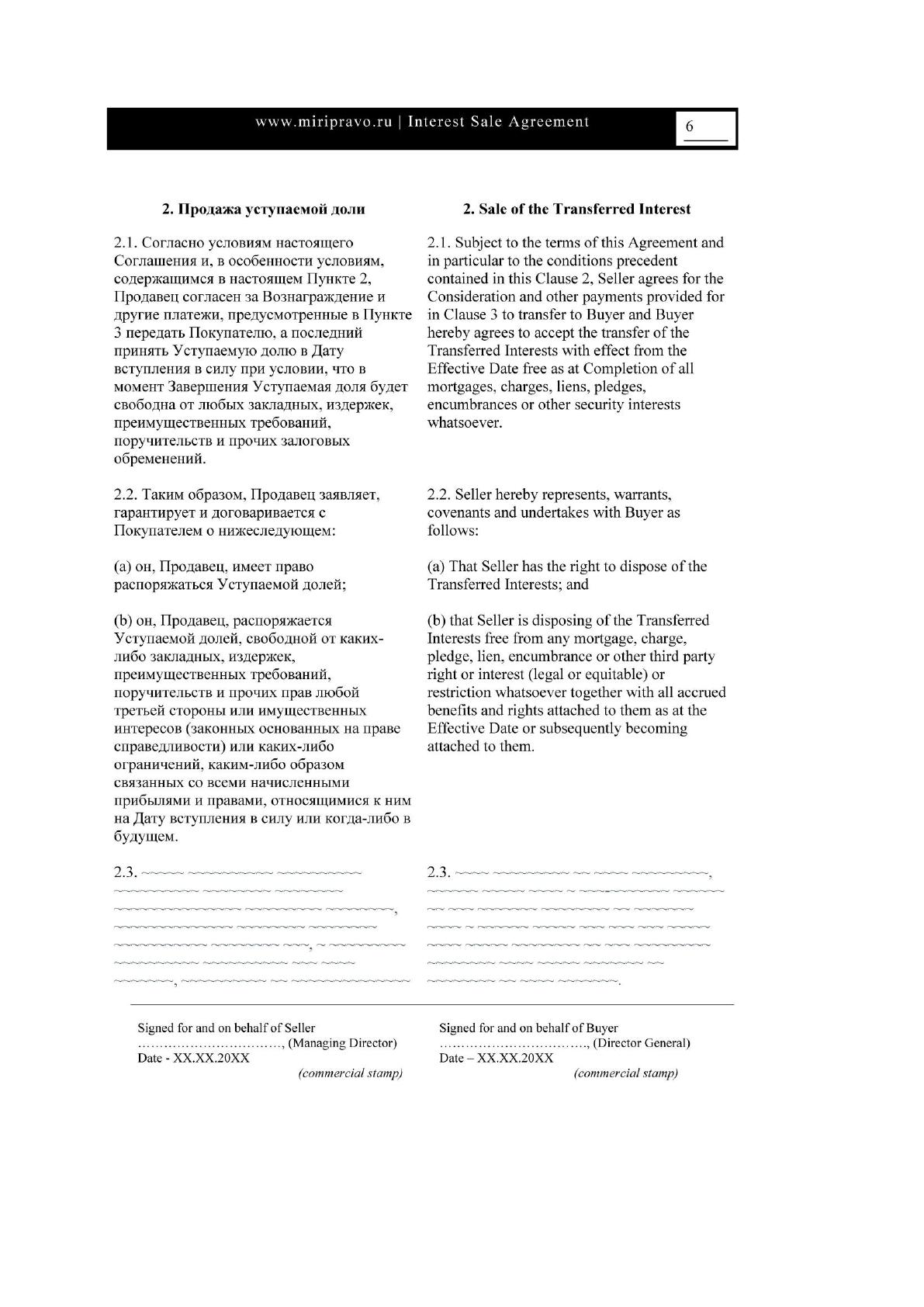
Приложение 9. Соглашение о продаже доли в СП, стр. 6.
101
Приложение 10. Отрывок из книги “A Systematic Approach to Translating
Contracts into English”, R. Lunn, стр. 19-26, и перевод.
Оригинал
6. The register dilemma
In this chapter on register, we look at how we reconstruct the functional elements
of the contract in the target language: everything from the superficial and noticeable (i.e.,
the headings, lead-in sentences and other signposts) to the more vital but less obvious
(i.e., the style and syntax coursing through the document). At some point we may even
want to distinguish between these two levels — the superficial and the more vital — and
do something different in each case.
What dilemma?
You do have a choice about register. Hence the title of this chapter. However,
when you start out translating contracts, you probably won’t have any dilemma. Your
instincts, translator resources (bilingual dictionaries, online forums but also translation
courses) and even the source language will push you down what seems like the only path
to take — towards a traditional legal register. As we’ll see, this is all well and good, but
we can improve our translations and make the process easier by tempering this leaning.
We can do this by aiming for what we are going to call a ‘modern register’. But first let
me explain what I mean by a ‘traditional register’ so you can see the difference.
The traditional register — our default setting
A traditional register is that formal legal register we all know and love. It’s the
crustiness we expect from a legal document — legalese, formality and redundancy,
which includes things like:
Typical signpost legalese at the beginning and end of the contract, e.g.,
whereas (to introduce each recitals); now, therefore […] the parties hereto now agree as
follows (in the lead-in to the operative clauses); in witness whereof (start of the signature
clause).
102
Lots of pronominal adverbs, e.g., hereby, thereof, whereby and hereinafter.
A healthy smattering of words like same, said, such, notwithstanding,
pursuant to and foregoing.
Doublets, e.g., due and payable.
A verbose style.
When we first translate contracts, we tend to lean in this direction and use all of
the above as much as possible. We might not get all the above elements in at first, but we
can quickly learn to. However, even if you don’t seek to emulate this register, you will
tend in this direction. For instance, while you may or may not learn to stick now,
therefore in the lead-in sentence to the operative clauses (as you might have seen done in
an English contract), you will probably always prefer said and such over this and that
because they sound more legal.
Why we go for as legal sounding as possible
Why do we lean towards a traditional register? Basically, for the three reasons
mentioned above (our instincts, the resources we use and the fact that the source
language may be more formal than English) and possibly a fourth — our isolation from
the world of contract drafting.
First, it seems the natural thing to do. We associate this register with legal
documents. So, as good translators, we attempt to replicate it, which actually comes quite
naturally. Because regardless of our background, we all seem to have a deep repertoire of
legalese to dig into. We may not get it right at first, but with some training and tinkering,
we can translate into as crusty a register as you’ll find. Being able to emulate this register
can even become a source of pride. At least I know it did for me.
Second, the resources we use push us in this direction, either because of the
nature of the resources themselves or inertia. Take bilingual dictionaries. Because they
can’t provide much context, they give us equivalents in a vacuum. So they will give
legalese equivalents even if drafters have stopped using such terms in English contracts
for a specific function. Thus, a dictionary may make an archaic term look like one you

103
should use in your translation. You also find this term-for-term translating on online
terminology forums as it’s pretty much the same situation — words in a vacuum. I’m not
saying we should throw away our dictionaries and turn away from online forums, just
that we need to temper what they tell us with what we find in drafting style guides and
model contracts. Especially with regard to ‘signpost’ elements of legalese.
Then we have inertia. We all keep going back to the same old terms and thus they
get propagated, both in the resources and in translation courses, which may not always be
informed by the most recent trends in English contract drafting.
Third, our source language may be more formal than English, which, of course,
means the dictionaries respond by providing us with the kind of archaic one-to-one
translations we spoke about above. Even our instinct will tell us to look for similar terms
in English. However, from a functional point of view (looking for target terms that
perform the same function), there are flaws in that approach. For instance, mimicking the
source register might hinder doing a particular job on the other side of the language
divide if such a register is not expected by target readers.
Lastly, as translators, we may be too many steps removed from the industry. By
the industry I mean the people drafting contracts in English today. Many of us operate in
isolation. Sometimes people give us feedback on our work, but these often aren’t experts
or people who regularly draft contracts in English. Indeed, I suspect that any feedback we
might get from experts is likely to concern legal terminology and not English contract
style, which the expert might ignore in a translation if he understands what’s going on
despite an inconsistent or archaic style.
We might get feedback from people in the translation industry. However, these
people are usually as far back from the action of drafting contracts in English as we are.
So we get feedback based on the model most prevalent with translators, i.e., the
traditional one based on trying to sound as legal as you can. Under these circumstances,
where other translators or linguists review your work, features of a modern contract style
might even get revised out of your work.
104
What our clients want matters. But we can best help intermediary clients by
providing them with better contract translations for the end client. Because when we
don’t have any instructions to the contrary (and even when we do, I’d suggest) we have a
duty to provide the best translation possible, which may mean straying from a collection
of typical or dictionary translations.
Thus, as a group, translators, reviewers and anyone on the translation side of the
fence may be enforcing or propagating an outdated style. And where clients do not even
ask for this in the first place, we have no grounds, other than inertia, for giving them
translations in this traditional register. Anecdotally, I’ve found that the closer to the
action my clients are (i.e., direct clients and lawyers, mainly in Spain), the more receptive
they become to a modern register, sometimes even asking for it before I say anything.
So that is what a traditional register looks like and why we might lean towards it.
We’re not talking about heading off in a radical new direction, just about tempering our
natural tendency to try to sound as legal as possible.
A modern register — what the style guides say
So what does a modern register look like? It basically strips away typical markers
of a traditional style when they serve no purpose. I.e., you don’t stray too far from
standard English for no gain or reason. You either get rid of the traditional hallmarks
(when redundant) or use simpler language instead.
We could describe a modern register as:
containing only ‘useful’ legalese and;
being sort of plain English, although it does not avoid technical terms or
legalese at any cost (given our audience, plain English is not the goal).
This description sums up the approach of most contract style guides. So in
practice, emulating this type of register in translation involves heeding the advice you
find in contract drafting style guides, which is the approach of this book. We sometimes
diverge from these guidelines, but we always follow them in spirit, in particular with
regard to using legalese purposefully — a principle we develop further in Tip 6.
105
… and a middle-ground option
As translators, we may sometimes want to pay homage to the traditional
stereotype, either for certain clients or because it feels safer. Establishing a middle
ground entails translating the more visible elements of formulaic language (usually at the
start and the end of the contract) in a more traditional style while translating style and
syntax in the modern register (mainly in the operative clauses). We talk about how to find
this middle ground in Tip 7. But for now, let’s look at why we might want to make the
modern register our starting point, which, in any case, is compatible with choosing a
middle-ground option.
Why start with the modern register?
The distinction we are making here between the traditional and modern is
arbitrary and never black and white. However, it does capture a difference in approach.
So while clients and other considerations may push or pull us in one direction or another,
we can decide which pole we lean towards. Rather than turn away from the traditional
register, we tone it down. Here are four reasons why we might choose to lean towards the
modern register:
First, it’s easier to get right because it’s more logical and criteria based. You can
more ‘think’ your way to the solution. Unlike with the traditional register, you don’t have
to remember as many set phrases. So you less need to refer back to past translations to
find the wording you usually use for certain patches of formulaic language.
With a modern register, you don’t have this problem as much because it is more
criteria based. It’s less like keeping up an act. Instead of remembering set phrases, you
follow guidelines. Thus, you can more often reason your way out of dilemmas instead of
chasing your tail wondering what the most usual traditional wording is. Using a modern
register feels like you have more control. It’s also easy to justify as you can point to an
approach rather than reasons why you chose a particular wording.
Second, clients and readers should find a modern register more helpful. Even
specialists may thank you for using a more straightforward style — even if they use a
more traditional one. Of course, any reader not used to reading legal documents will be
106
grateful to you for getting rid of the deadwood. Thus, we can make our translations more
useful and usable when we use a modern register. Because, as the translations are more
accessible, we can assume that people are more likely to read, understand and use them.
All of which should benefit whoever commissions the translation.
Third, a modern register appears closer to where contract drafting in English is at.
At the very least, all the contract style guides espouse such an approach. I don’t know
how widespread this model is in practice. However, unless you know that your client (the
end client or user of the translation, not the intermediary) really wants a traditional
register, the best option is to emulate what the experts suggest. Again, translating into a
style that you can point to in a style guide makes it easy to justify your decisions.
Fourth, you can argue that translating contracts into English in a modern register
is more faithful, at least in terms of function. Because if your source language favours a
traditional style for contracts whereas English leans more to a modern one, then you can
say these styles are functional equivalents, i.e., traditional for the source language equals
modern for English. To translate in either direction, you should take this difference into
account.
Tempering your instinct to the degree you want
We do have a choice about register, even though it may not appear this way when
we start out translating contracts. We should choose rather than have the decision made
for us by the resources we use, which leads to a patchy style.
We can benefit from tempering our instinct to sound as legal as possible, which
we do by heeding the advice of drafting experts. How far away you move from this
natural tendency and the traditional register is up to you. In my case at least, seeing what
the drafting experts espouse and reflecting on our goals as translators has made me
change tack completely. While I used to lay the legalese on as thick as I could, I now use
it sparingly. I believe a modern register is better for everybody — the translator, the
client and the reader.
Of course, you may not arrive at the same conclusion. But understand that you do
have a choice about register and should make a decision. Because making this decision at